Pepsi, Knickerbocker Ice, and the Working Families Navigating NYC's 1950's Inflation
The names of the corporate giants, the origin of the immigrants, and the mechanisms of automation change across decades, but the underlying struggle for working families remains the exact same today.
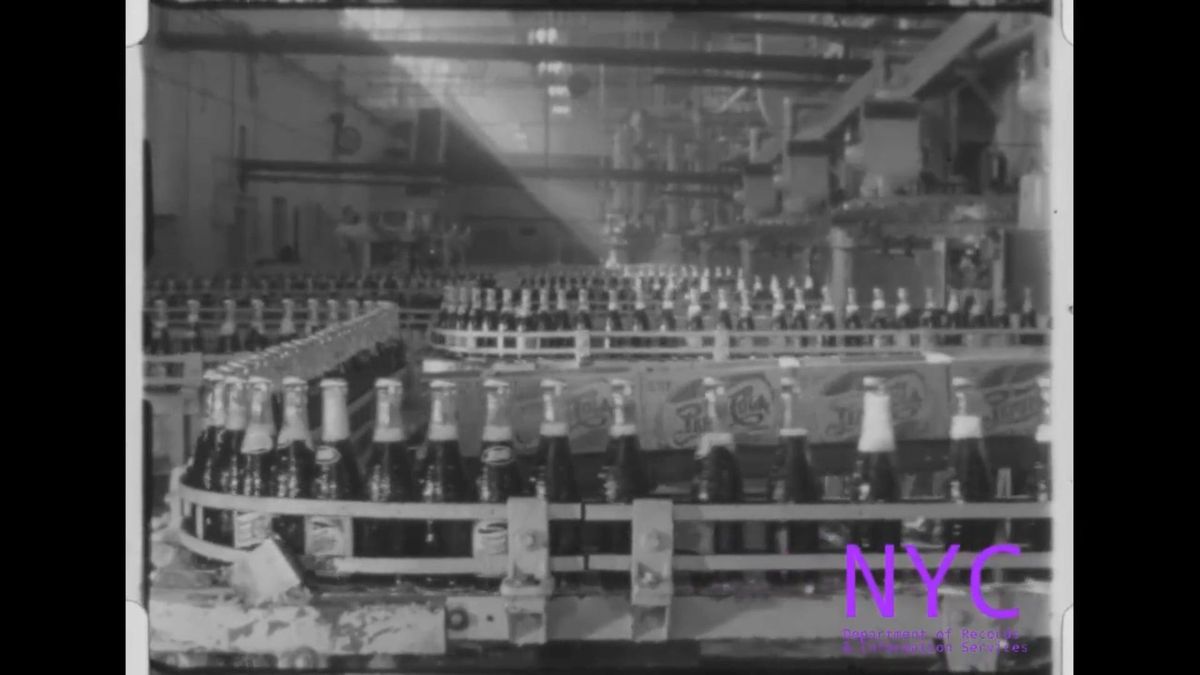
By 1950, post-war economic growth was reshaping urban life across New York and New Jersey, forcing working-class families to navigate corporate expansion alongside rising living costs. Archival footage from this era pairs two distinct moments of a changing city: corporate media coverage of a Pepsi Cost of Living Adjustment, alongside scenes of the Knickerbocker Ice Company.
WATCH the full video on our website and sign up for our free weekly newsletter for more stories like these
On paper, Pepsi’s Cost of Living Adjustment (COLA) reflected a broader trend where major employers adjusted wages to match inflation. But inside Black, Brown, and working-class immigrant households, corporate wage formulas told a very different story. While adjustments helped keep pace with rising prices for food, rent, and utilities, corporate workforce structures were deeply divided by race, class, and gender. Black workers were frequently restricted to low-wage service and sanitation roles, while newly arrived European and Afro-Caribbean immigrants were channeled into dangerous, low-pay industrial jobs. Meanwhile, working women—who managed household budgets through every economic shift—faced limited access to equal pay or upward mobility.
At the same time, manual industries were rapidly disappearing. Companies like Knickerbocker Ice, which once relied on thousands of local workers and immigrant laborers to deliver natural ice, were pushed aside by modern refrigeration and automated manufacturing.
This wasn't just industrial progress; it was an economic collision. Corporate machines restructured to maximize profit, leveraging class divisions to keep labor cheap while working-class families bore the burden of every shift.
The names of the corporate giants, the origin of the immigrants, and the mechanisms of automation change across decades, but the underlying struggle for working families remains the exact same today.
Why This Story Matters
- People Over Systems: Behind policy terms like "cost of living adjustments" are parents, immigrant workers, and households carrying the weight of economic shifts.
- Intersectional Solidarity: The transition from physical labor to corporate machines exploited racial, gender, and immigrant class divides, making wage equity a shared, ongoing fight across all working communities.
- Connecting History to Present Day: The struggle to match paychecks with living costs in 1950 mirrors today’s corporate automation, wage stagnation, and economic survival strategies across Newark, Detroit, Philadelphia, and New York.
IN THE WAKE TV is a community-centered media platform rooted in New York and New Jersey. Through original storytelling, photography, and curated journalism, we document Black life where it is lived while highlighting the relationships that connect our communities across regions.
The story of the 1950 NYC economic collision between local Knickerbocker Ice and corporate giant Pepsi is a local history, but its heartbeat belongs to every neighborhood from Newark and Camden to Detroit and Philadelphia, where families continue to reclaim their narrative, protect local resources, and build futures rooted in collective dignity.
Comments ()