Community Archives, Cultural Resistance, and Local Voices: What to Catch at Maysles Documentary Center This October
Cultural projects—like the Congo in Harlem preserve a living archive of resilience, proving that community-led solutions and collective progress are already underway.
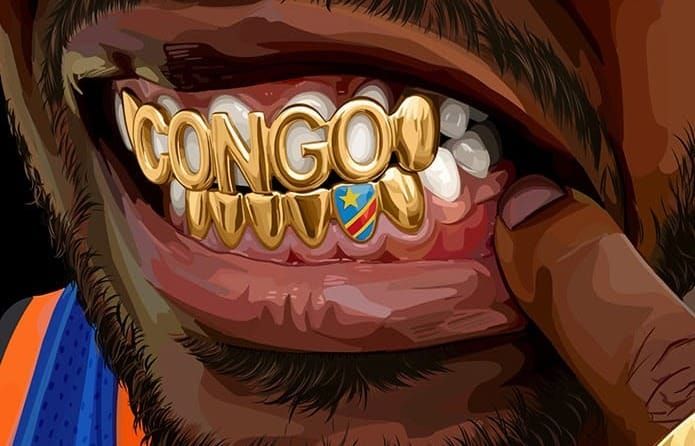
This October, Harlem’s iconic Maysles Documentary Center is hosting the 18th edition of Congo in Harlem alongside transformative youth education showcases.
Here are five curated highlights from this month’s lineup that reflect our commitment to living archives, self-determination, and local creative power.
1. Uprooted: Five Women Against a Colonial Crime (Métisses: Cinq Femmes Contre Un Crime d’Etat)
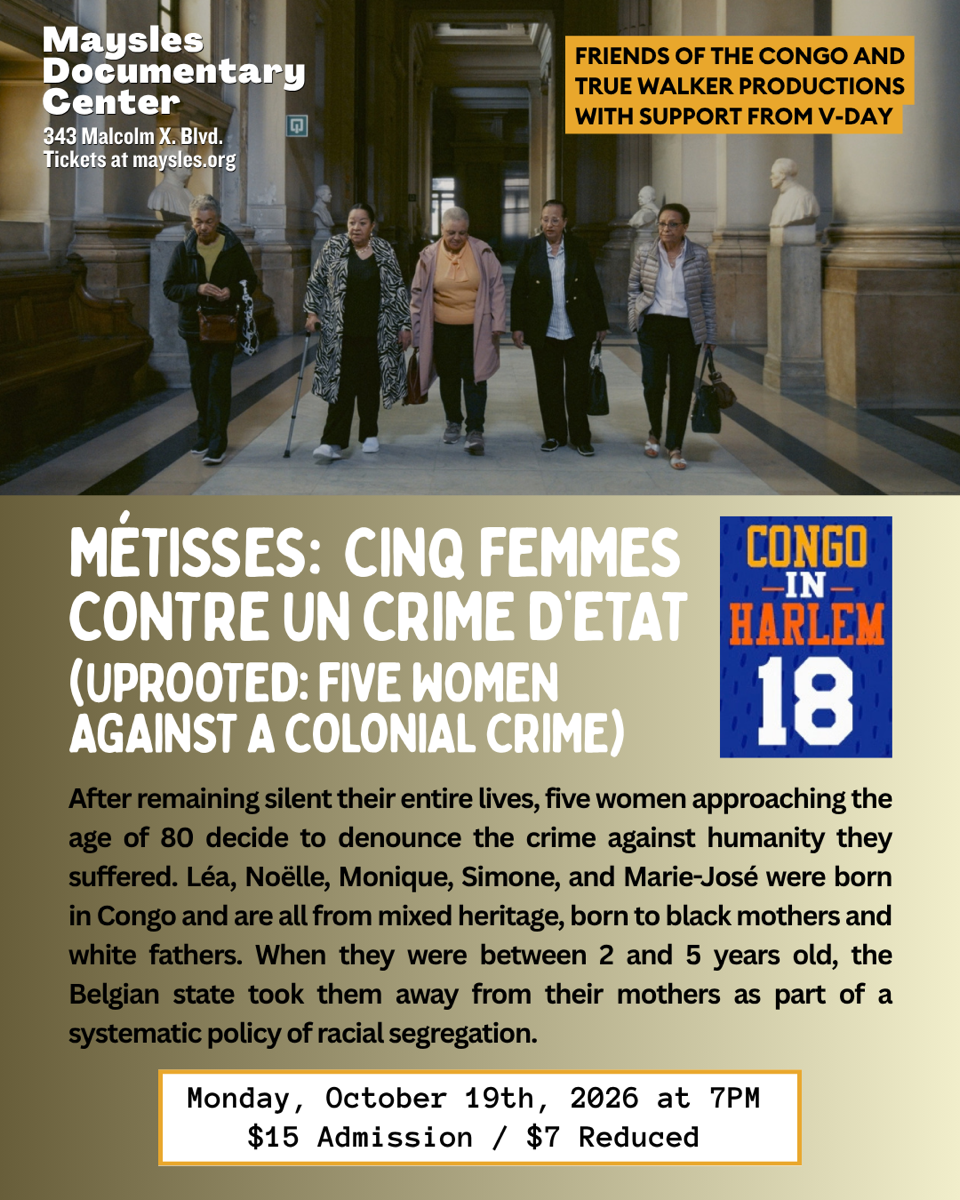
- Directed by: Quentin Noirfalisse & Jean-Charles Mbotti Malolo
- When: Monday, October 19, 2026, at 7:00 PM
Separated from their mothers between the ages of 2 and 5 under a systematic Belgian policy of racial segregation, five women approaching 80 decide to break decades of silence. Combining documentary footage with animation, the film follows their lawsuit against the Belgian state for crimes against humanity. It is a powerful testament to memory, justice, and the courage of Black women claiming their historical record.
2. What We Said to Brussels Airlines
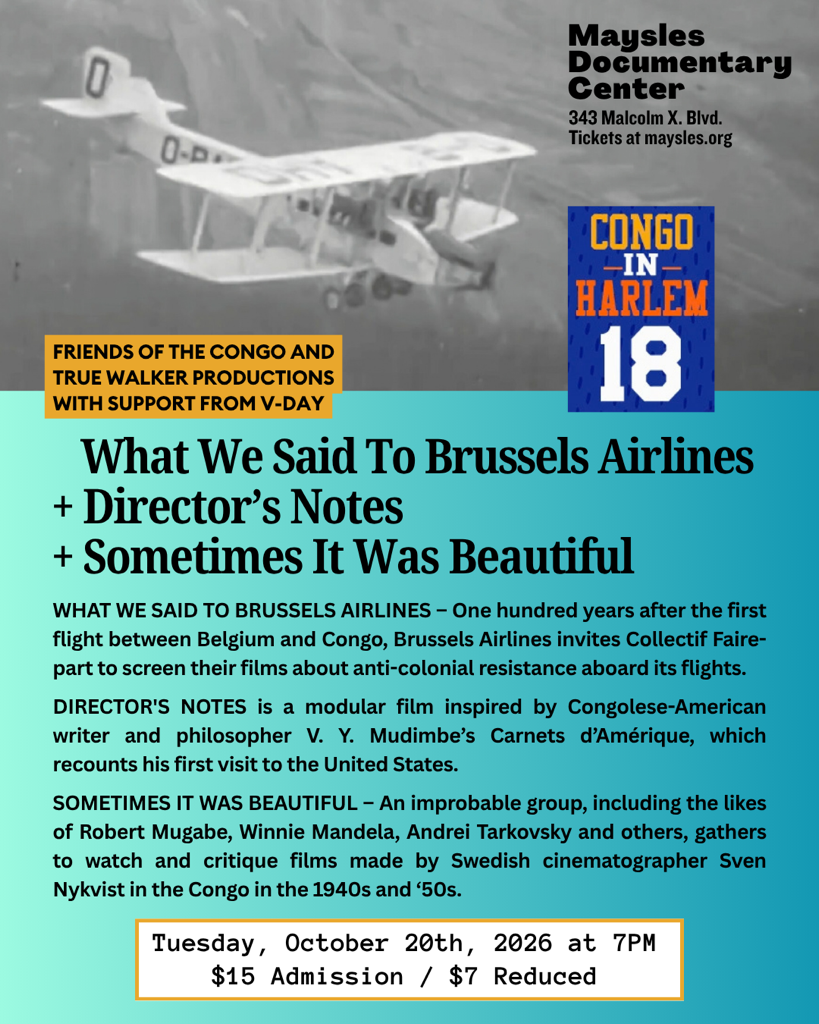
- Directed by: Collectif Faire-Part
- When: Tuesday, October 20, 2026 at 7:00 PM
When Brussels Airlines invites an ensemble of Belgian and Congolese artists to screen anti-colonial films on their flights, an honest conversation about power and corporate image-laundering unfolds. The film navigates the fine line between institutional co-optation and taking back space to reach captive audiences, exploring what collective resistance looks like in contemporary spaces.
3. Ndjimu: Deep Cobalt & Mikuba: Cobalt
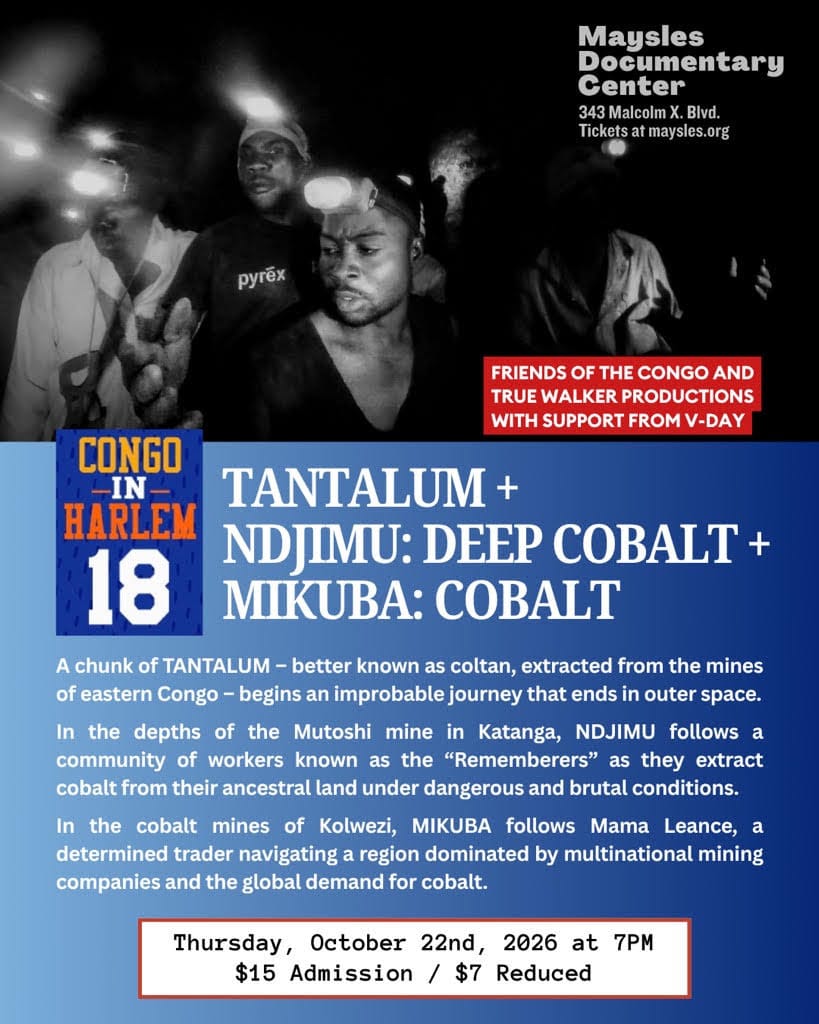
- Directed by: Petna Ndaliko Katondolo
- When: Thursday, October 22, 2026 at 7:00 PM
This double feature dives into the heart of Katanga’s cobalt mines. Ndjimu follows the "Rememberers"—artisanal miners extracting cobalt under dangerous conditions to fuel the world's modern technology. Mikuba centers Mama Leance, a trader who encounters an ancient copper-smelting practice that honors a spiritual, non-extractive relationship with the land. Together, these films balance systemic critique with ancestral wisdom.
4. Black Zombie
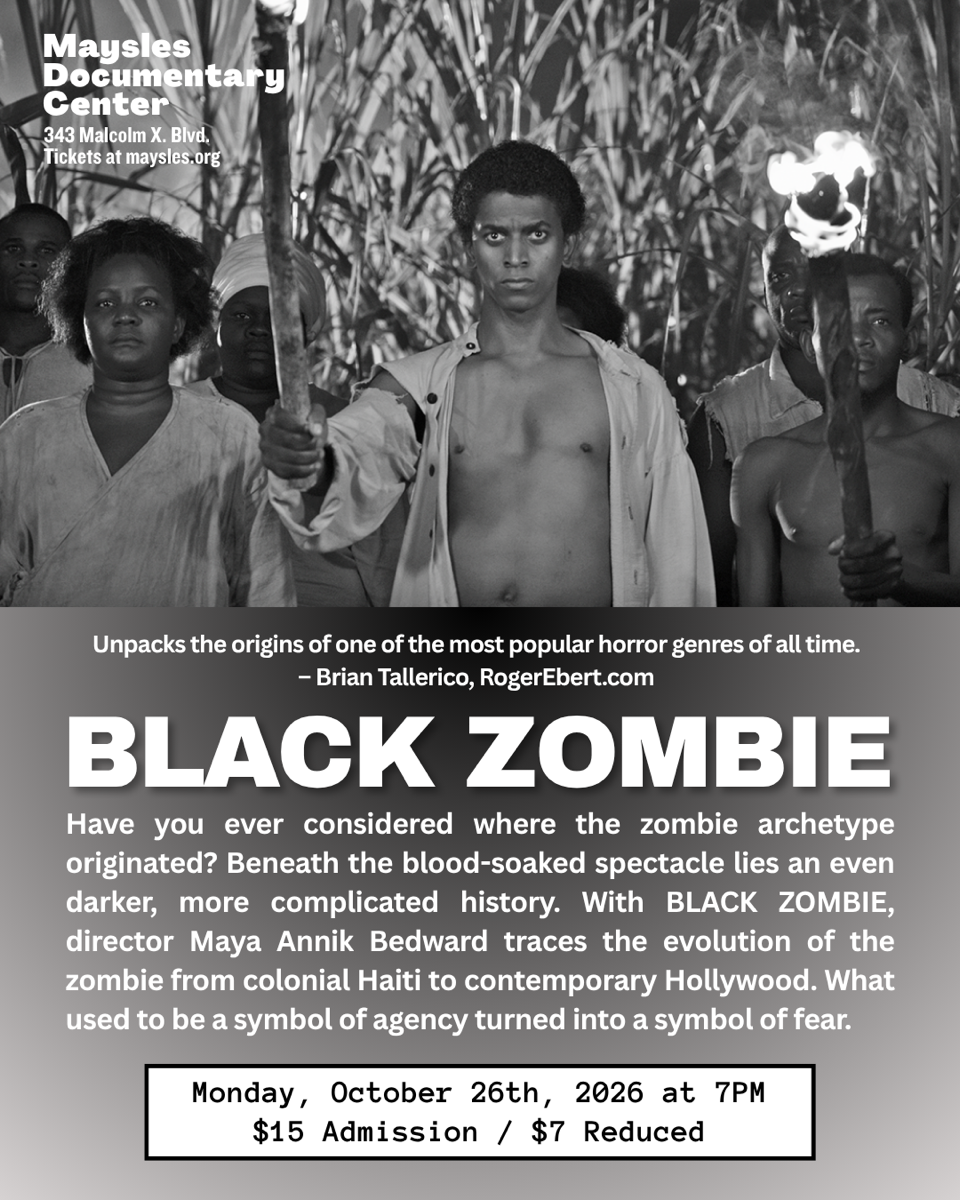
- Directed by: Maya Annik Bedward
- When: Monday, October 26, 2026 at 7:00 PM
Traced back to colonial Haiti, the archetype of the zombie was originally a symbol of enslavement, spiritual agency, and resistance before Hollywood mutated it into a lucrative pop-culture monster. Director Maya Annik Bedward unearths this hidden history through archival footage and cultural commentary, offering a vital lesson on how Black folklore and struggle have been repurposed by mass media.
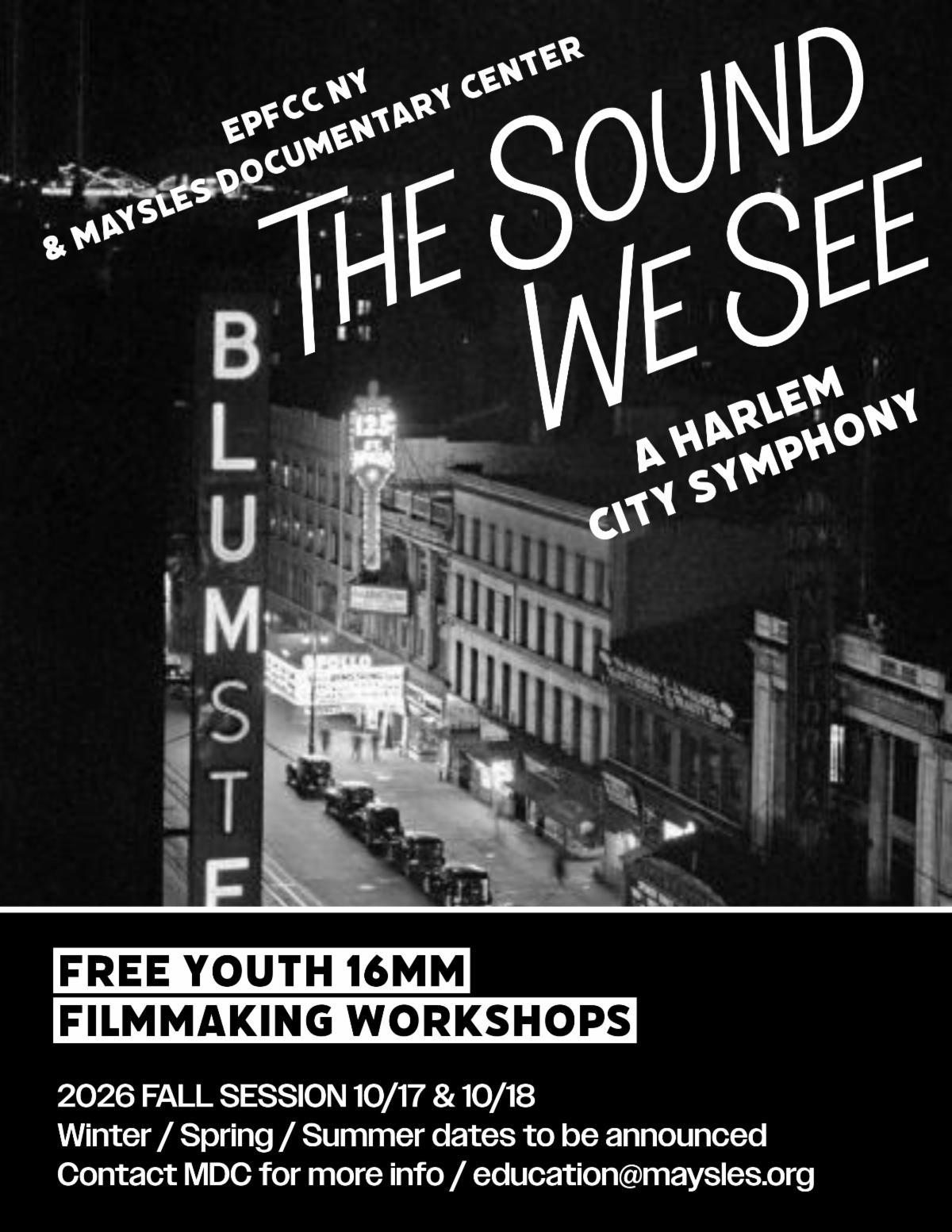
5. Rooted in Harlem: Free 16mm Workshop & Youth Student Showcase
- Highlights from Summer Education Programs: Wednesday, October 14, 2026 (Reception at 5:30 PM | Screening at 7:00 PM)
- The Sound We See: A Harlem City Symphony (Free 16mm Workshop): Saturday & Sunday, October 17–18, 2026
Storytelling begins at home. Maysles is celebrating its summer youth cohorts—spanning music videos, photography, and documentary filmmaking—with a public showcase and Q&A. Additionally, aspiring young filmmakers can join a free weekend workshop in partnership with the Echo Park Film Center Collective to learn 16mm filmmaking and document the daily rhythms of Harlem for an ongoing year-long City Symphony project.
How to Attend & Support
- Location: Maysles Documentary Center, 343 Malcolm X Blvd, Harlem, NY
- Tickets & Registration: Visit the official Maysles Documentary Center website to purchase screening tickets or register for free educational workshops.
Why Standing with Friends of the Congo Matters
At IN THE WAKE TV, we believe Black culture, organizing, and history do not stop at city or national borders. The local struggles for self-determination, land rights, and human dignity that we document in our own neighborhoods are deeply connected to broader global movements.
Standing with Friends of the Congo is vital because it honors three core truths about our shared global heritage and future:
- Centering Lived Experience Over Institutional Narratives: Friends of the Congo has consistently challenged international silence surrounding the Democratic Republic of the Congo. They ensure that the voices of everyday Congolese people—their grassroots organizing, artistic expression, and lived experiences—are at the center of the narrative, rather than being defined solely by conflict or corporate extraction.
- Exposing the Global Connections to Local Life: The resource extraction in the Congo powers the technologies, energy systems, and global economies that shape our daily lives across the world. Friends of the Congo bridges these dots, reminding us that true solidarity requires recognizing how global economic interests directly impact Black lives, both on the continent and throughout the diaspora.
- Preserving a Living Archive of Resistance and Hope: For decades, Friends of the Congo has supported Congolese youth, women, and community leaders in their fight for peace, justice, and self-determination. By amplifying their cultural projects—like the Congo in Harlem festival—they help preserve a living archive of resilience, proving that community-led solutions and collective progress are already underway.
Standing with Friends of the Congo is not simply an act of cinematic support for a distant cause; it is an embrace of our interconnected humanity, collective progress, and shared struggle for dignity.
Comments ()